-
- Material
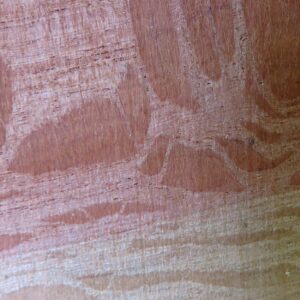
Australian Sheoak
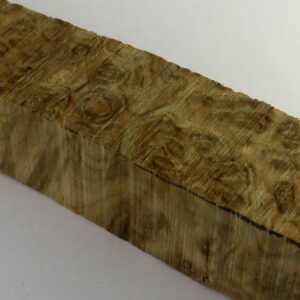
- Australian Sheoak (allocasuarina) is not a true oak (quercus) relation but when milled it's easy to see how it was called 'oak' because of the medullary rays that form a lace-like pattern on the sawn surfaces. Mostly pink to reddish brown, with occasional darker brown streaks, the sapwood can lighten to a yellowish brown. Sheoak finishes and turns well and…
- Read more
-
- Material
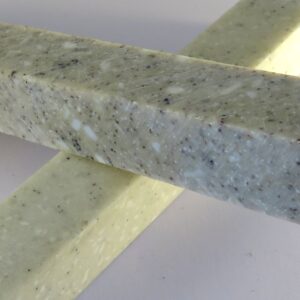
Corian ®
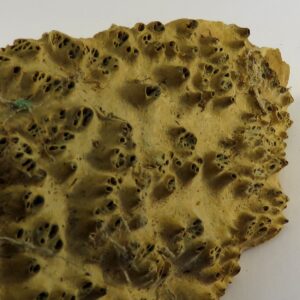
- Corian® will be familiar to many people from the worktops in their kitchens and counters used in shops and other commercial premises. It is the waste from this solid-surface industry that forms my stock and that really appeals to me in my values over recycling. A proprietary blend of minerals and acrylic, which creates a stone-like material, it comes in…
- Read more
-
- Material
English Box
- Common Box (buxus sempervirens) is ideal for smaller scale, turned wood creations like mine, given the tree's comparatively small size. It works well in delicate carvings, chess pieces, woodwind instruments and furniture details like cabinet or drawer handles. With a straight grain and fine, even texture the wood colour is a uniform light cream when newly worked but it can…
- Read more
-
- Material
English Laburnum
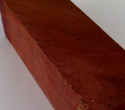
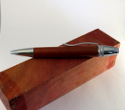
- Laburnum (laburnum anagyroides) is commonly found right across Europe in good sustainable stocks and, as a smaller tree, is ideal for use in delicate and small turned items. Its colour ranges from a 'burnt orange' hue through to a deep claret-brown; combined with its deep lustre it makes a good visual replacement for ebony. Despite being a little hard and…
- Read more
-
- Material
English Oak Burr
- Oak (quercus robur) burr (also 'burl') is easily recognised, a growth on a tree in which the grain has developed in a deformed way. Burrs come about because the tree is under some form of stress, by way of physical damage, virus or a fungus. As a result, the burr yields a complex patterned and figured wood that is sought…
- Read more
-
- Material
English Walnut
- English Walnut (juglans regia) with its distinctive straight, regular grain and deep lustre is generally considered to be one of the most attractive timbers. It is often to be found in delicate, high quality work such as cabinetry, gun-stocks, panelling, inlay and veneers, small carved and turned items and is ideal for my pen and other personal designs. In the…
- Read more
-
- Material
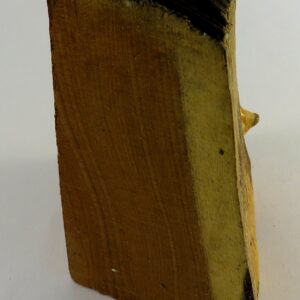
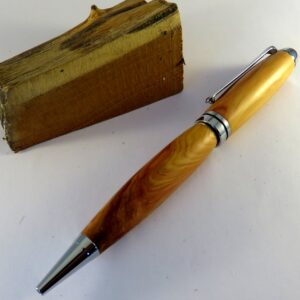
English Yew
- Common Yew (taxus baccata) is a really interesting wood; known by many for its association with churchayrds. A softwood, it demonstrates all the characteristics of a hardwood; dense and strong it is also highly flexible - hence its use in archery bows. A little like Laburnum, Yew heartwood ranges from orange-brown to darker chestnut or claret hue, with a great…
- Read more
-
- Material
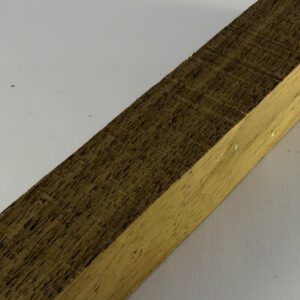
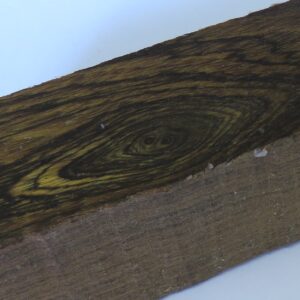
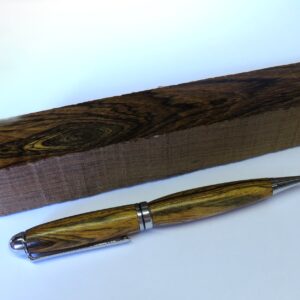
Mexican Bocote
- Mexican Bocote (cordia) is a very eye-catching timber that lends itself to a number of uses where appearance means everything: fine furniture, cabinetry, veneers, boat-detailing, stringed instruments, gun-stocks and turned objects like my pens. In the examples below you can see how the grain pattern swirls and forms "eyes" in the timber. Colours darken with age but the work always…
- Read more
-
- Material
Pink Ivory
- Pink Ivory (berchemia zeyheri) originates in Southern Africa and occasionally features in local folklore as a “royal tree”. Notable for its range in colour, from pale brownish pink to vibrant, deep, reds and pinks, the grain is typically straight and even in texture but frequently shows up a swirly “fiddleback” pattern, the kind sought after by stringed instrument makers. Another…
- Read more
-
- Material
Spalted English Beech
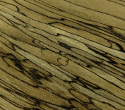
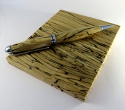
- Common Beech (fagus sylvatica) is a deciduous tree native to southern England and South Wales. It's very popular with wood turners and is suitable for furniture as well as delicate items. The grain in beech is, naturally, a pale tan colour and has a fine tight grain. Spalting is caused by fungi that attacks the drying wood and creates a marble-like…
- Read more